Docs
A design-system-first page-builder toolkit. Strike the right balance for your site — make it easy for editors to create engagement while staying compliant.
Why Inka?
- Compliance and engagement, not a trade-off — you decide where the dial sits for each site, instead of choosing between locking editors down and letting the design system drift
- Design-system-first — components declare what they tolerate, so off-system output can't be produced
- Multi frontend, multi backend — Next.js, Nuxt.js, Astro, plus server-only stacks (PHP, Django, Rails, Laravel) via the server-render pattern; switch channels mid-edit
- AI under the same constraints — everyone's AI can build you a page; ours can't build one that breaks your design system
- Evidence, not just warnings — rules a machine can't decide go to the people who can, and the determination is recorded against that version of the content
- Quick to adopt — enable visual editing with simple HTML data attributes, no React or Vue required in your frontend
- A toolkit, not a CMS — good out of the box with zero configuration, extensible when you need more; open source and self-hostable
- Enterprise features — versioning, i18n, workflow, and automated content rules
Try the online demo
The fastest way to feel what Inka does is to log into the hosted demo and edit a real page against a real frontend.
Open <https://hydra.pretagov.com>, log in, then:
- Open user preferences (bottom-left).
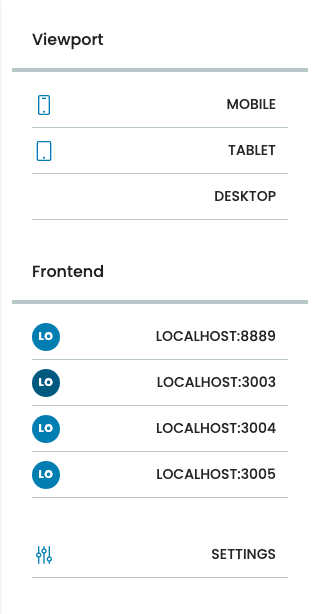
- Pick one of the preset frontends, or paste in your own frontend URL.
- Edit any page — every change updates the live preview.
The default preset is a Nuxt.js frontend deployed as an SSG to demonstrate scale-to-zero editing on free hosting. An Astro example demonstrates the server-render pattern for static-first frameworks. See Build a frontend › Deployment patterns.
To run Inka locally against your own frontend, see the Run Locally section of the project README.
Live Preview
To make your site editable with Inka you load hydra.js in your frontend and call initBridge(). This sets up a two-way communication channel that handles authentication, page navigation, and live content updates.
Maps
The maps block can have embeded a Map (Google Maps, OpenMaps, etc).
Server-rendered frontends
Inka works with any frontend, including ones that have no client-side
Search
The search block allows the content of the website to be listed. Users can use so-called facets to select certain properties of the listed content in order to filter them (e.g. filtering the news of 2022).